
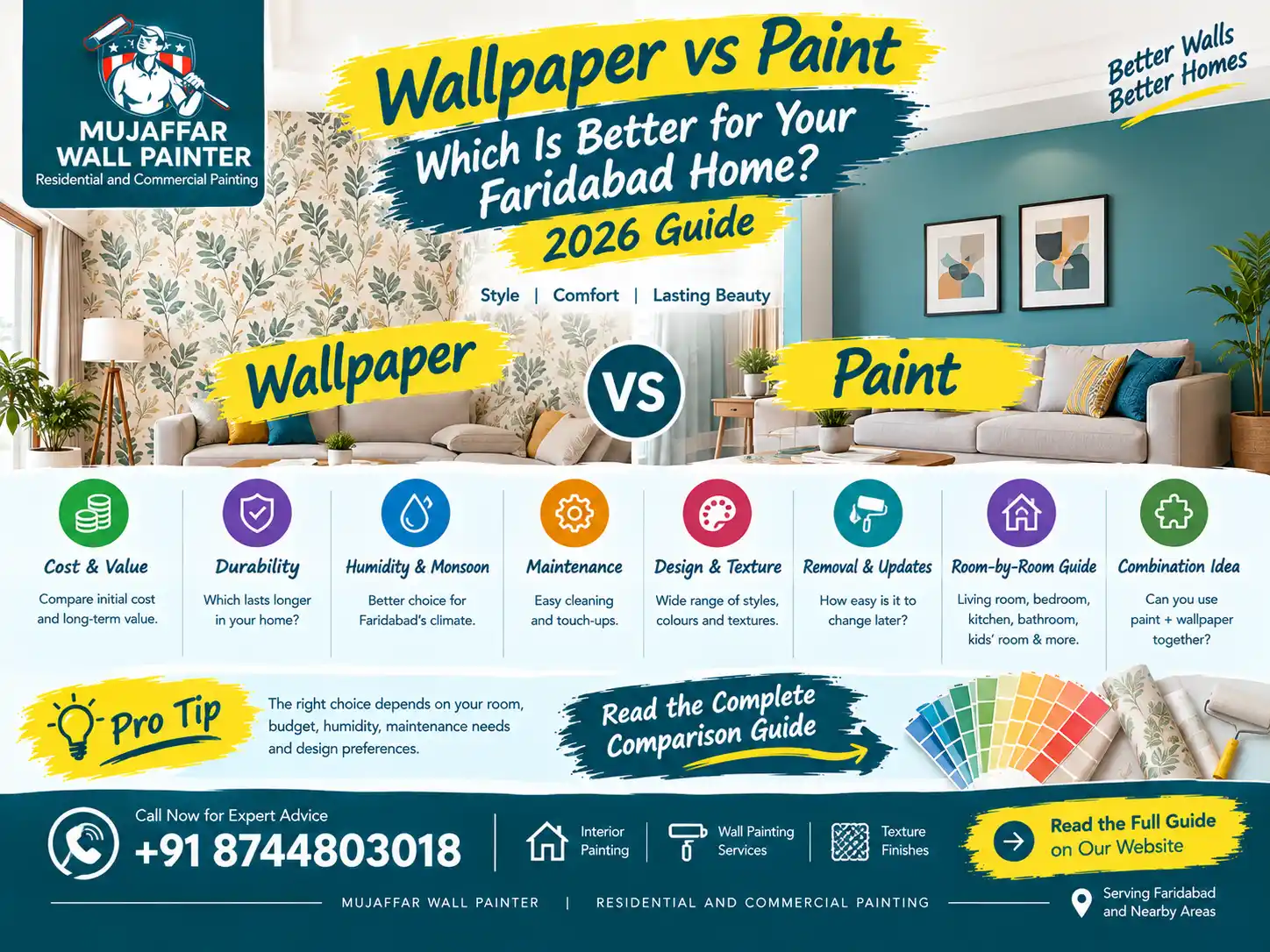
Wallpaper vs Paint: Which Is Better for Your Faridabad Home? (2026 Comparison)
Wallpaper vs Paint: Which Is Better for Your Faridabad Home? (2026 Comparison)
Standing in front of a blank wall trying to decide between paint and wallpaper? It’s not just a style question cost, durability, humidity, and how the room actually gets used all matter more than which one simply “looks nicer” in a showroom sample. Here’s an honest, practical comparison to help you decide room by room.
Quick Verdict
| Factor | Paint | Wallpaper |
|---|---|---|
| Upfront cost | Lower, more predictable | Generally higher, varies widely by material |
| Lifespan | 3 to 5 years before a fresh coat | 10 to 15 years if installed well |
| Humidity tolerance | Handles moisture well with the right finish | Prone to lifting/peeling in humid rooms |
| Touch-ups | Easy to spot repair | Hard to patch invisibly |
| Design impact | Flexible color changes, accent walls | Patterns, texture, murals paint can’t replicate |
| Best for | Whole-home painting, humid rooms, frequent updates | Feature walls, bedrooms, low humidity statement spaces |
Cost: What You’re Actually Comparing
Standard interior paint in Faridabad runs roughly ₹15 to ₹45 per sq. ft. (see our full pricing guide), and that figure includes labour and two coats. Wallpaper’s material cost alone is generally higher than standard emulsion, and installation (pattern matching, wall prep, adhesive) adds further to the total the exact gap depends heavily on the specific wallpaper you choose, since prices range enormously from basic vinyl rolls to premium textured or imported designs. As a rule of thumb: paint wins on upfront cost for whole room or whole home coverage; wallpaper’s value case improves the more years you expect to keep the same look.
Durability & Lifespan
Paint typically needs a fresh coat every 3 to 5 years to stay looking sharp, especially in high traffic zones (see our wall maintenance guide for how to stretch that timeline). Quality wallpaper, properly installed, can last 10 to 15 years but that longevity assumes stable conditions. In practice, many homeowners update wallpaper sooner anyway, simply because trends and preferences shift before the material actually wears out.
Humidity: The Factor Faridabad Homes Can’t Ignore
This is where the decision gets genuinely local. Faridabad’s monsoon humidity is hard on wallpaper seams can lift, edges can peel, and adhesive can weaken in consistently damp conditions. Paint, especially with the right washable or moisture-resistant finish, handles humidity far better. Practical rule: paint for kitchens, bathrooms, and any wall with a history of dampness; wallpaper is safest in dry, well-ventilated rooms like bedrooms and living rooms away from exterior damp walls. If you’re unsure whether a wall has an underlying moisture issue, check our waterproofing guide before committing to wallpaper there.
Maintenance & Touch-Ups
Paint is forgiving a scuff or stain can usually be spot-cleaned or touched up with leftover paint from the original can, invisibly. Wallpaper is much harder to repair invisibly; a torn or stained section often means replacing that whole panel, and matching the pattern seam can be tricky even with leftover rolls.
Design & Style
Wallpaper’s real strength is pattern and texture murals, botanical prints, geometric designs, and textured finishes that paint alone genuinely can’t replicate. If you want a strong design statement without full commitment, paint still offers plenty of range through color combinations and texture finishes like Royal Play or metallics see our wall painting ideas guide for texture options that get close to wallpaper’s visual impact.
Peel-and-Stick Wallpaper: A Middle Ground
Removable peel and stick wallpaper has become popular as a lower-commitment option good for renters or anyone who wants to experiment on a single accent wall without a permanent installation. It works best on smooth, fully cured, painted walls; textured or damaged walls give poor results, and it should be treated as a temporary/accent solution rather than a whole-room, long-term choice.
Room by Room Recommendation
- Living room either works; wallpaper on one accent wall + paint elsewhere is a popular middle ground.
- Bedroom wallpaper does well here (lower humidity, less foot traffic, more time to enjoy a design statement).
- Kids’ room paint is usually more practical (easier to clean, more washable-finish options, more forgiving of marks).
- Kitchen paint, specifically a washable/semi-gloss finish humidity and grease make wallpaper a poor fit.
- Bathroom paint, always this is the room where wallpaper struggles most.
- Pooja room — either, though a textured or metallic paint finish (see our ideas guide) often achieves a similar premium look with better humidity tolerance.
Which Should You Choose? A Quick Checklist
- Is the room prone to humidity or steam? → Paint.
- Do you want a strong pattern or texture statement? → Wallpaper (or a textured paint finish as a paint only alternative).
- Are you renting, or unsure how long you’ll stay? → Paint, or peel-and-stick for a low commitment accent.
- Is this a high-traffic area with kids or pets? → Paint, for easier touch-ups.
- Do you want the whole home covered on a predictable budget? → Paint.
Conclusion
There’s no universal winner paint is the more practical, budget-friendly, humidity-resistant choice for most of a Faridabad home, while wallpaper earns its place on a single accent wall or in a dry, low-traffic room where its design impact really shines. Many homeowners end up using both. If you’re not sure which fits your specific walls, our free site visit can help you decide room by room.
FAQs
1. Is wallpaper more expensive than paint?
Generally yes for upfront cost, though the exact gap varies enormously by wallpaper material and pattern paint remains the more budget-predictable option for whole room coverage.
2. Can I put wallpaper in a Faridabad bathroom or kitchen?
Not recommended humidity and grease cause wallpaper to lift and peel faster in these rooms. Paint with a washable finish is the safer, more practical choice.
3. How long does wallpaper actually last?
10 to 15 years if installed well in a suitable (dry, low-humidity) room, though many homeowners update it sooner for style reasons rather than wear.
4. Is peel-and-stick wallpaper a good option for renters?
Yes, for a single accent wall on smooth, cured, painted surfaces it’s not well suited to textured or damaged walls.
5. Can I combine wallpaper and paint in the same room?
Yes a common, cost-effective approach is one wallpaper accent wall with paint on the remaining walls.
6. Which is easier to touch up if damaged?
Paint, by far a scuff or stain can be spot-repaired invisibly, while wallpaper damage often means replacing an entire panel.

Leave a Reply